3D Printing Info
Where it is used
Large or repetitive prints on printers that can sustain high flow
Sources
- Polymaker Launches New High-Speed 3D Printing Filament — PolySonic PLA & PLA Pro · 2023-11 · doc
- PolySonic PLA — product page · 2026-08 · vendor
PLA with a raised melt index and tuned crystallisation so it can be extruded at roughly 24 mm³/s, about 30 % more flow than standard PLA at the same nozzle temperature.
Open in interactive comparison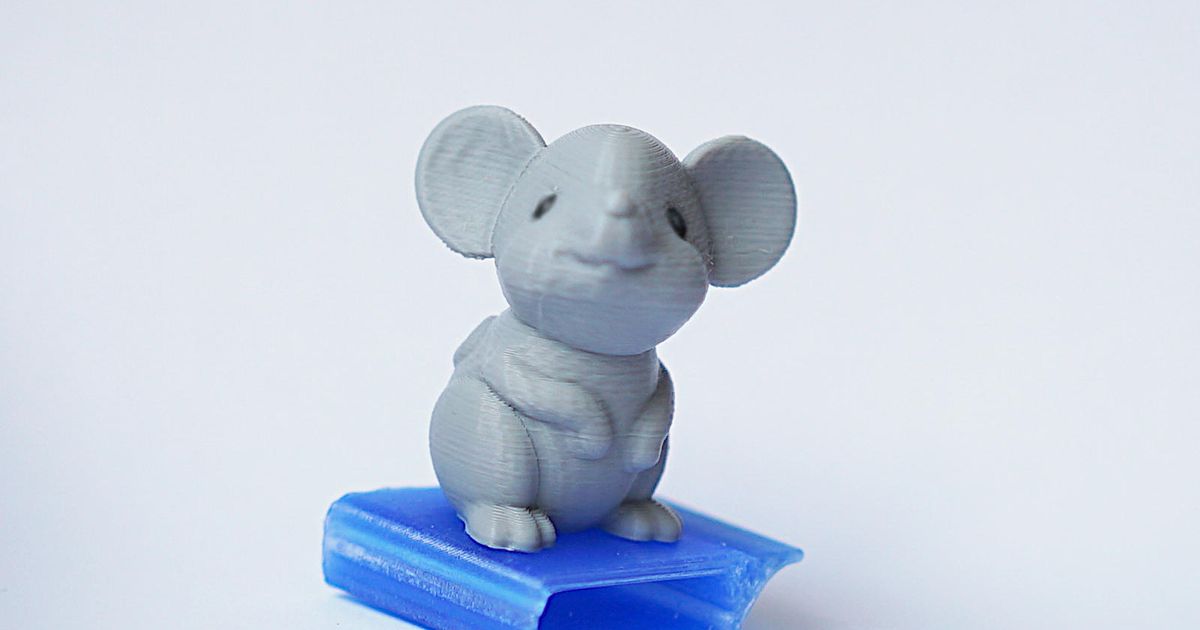
Large or repetitive prints on printers that can sustain high flow
PLA with a raised melt index and tuned crystallisation so it can be extruded at roughly 24 mm³/s, about 30 % more flow than standard PLA at the same nozzle temperature.
High-speed PLA primarily changes manufacturing throughput. Its melt behavior allows more plastic through the nozzle before underextrusion becomes the bottleneck. This matters most on long walls, infill and repeated parts where the printer can actually sustain that flow; a small, intricate model may spend most of its time limited by acceleration or cooling instead.
The material still fills much the same role as ordinary PLA: rigid models and prototypes made on accessible equipment. High flow is not a promise of stronger parts. Polymaker’s PolySonic data show that printing speed changes mechanical results, and the formulation retains PLA-like limits in heat resistance and sustained-load behavior. A speed label should therefore be treated as a processing advantage, rather than a new service-temperature class.
A mouse figurine attached to a door-stop clip. The grey figurine is uploader-reported Hyper PLA; the blue base is a separate part.
Listing note: “I printed the Figurine in Hyper PLA grey.”
Printables listing uploaded by Q · CC BY 4.0Mouse Figure remix: Q (credit source) · Original Mouse Figure design: Whitney Richmond (credit source)Original listing · Checked 2026-10-17. This is an uploader report, not an independent material test.Source image · Image bytes unchanged; displayed in full.
Representative catalog values. Check the exact grade and its linked conditions before using a setting.
210–230 for high-speed work; 190–210 at classic speeds
210–230 for high-speed work; 190–210 at classic speeds
30–60 (Polymaker); 35–45 (Bambu Lab)
30–60 (Polymaker); 35–45 (Bambu Lab)
Open frame is fine
55 °C for 6 h; 50 °C for 8 h (Bambu Lab)
55 °C for 6 h; 50 °C for 8 h (Bambu Lab)
Open a topic to explore the complete data. Each value keeps its original conditions, units and dated sources.
| Property and unit | Published value and conditions | Sources and dates |
|---|---|---|
| Base polymer / chemistry | PLA with rheology and crystallisation tuned for high volumetric flow; melt index 15.4 g/10 min vs 7–11 for standard PLA | 2 sources
|
| Density (g/cm³) | 1.23 (ISO 1183, at 21.5 °C) | 1 source
|
| Typical price (USD/kg) | Mainstream 1 kg spools cluster near 20 | 3 sources
|
| Price range across brands (USD/kg) | 11–33 across brands; budget house brands 11–18, Prusament 33 | 3 sources
|
| Market availability (1–5) | Stocked by most mainstream brands | 3 sources
|
| Spool sizes & diameters | 1.75 mm; 1 kg spools | 2 sources
|
| Typical applications | Large or repetitive prints on printers that can sustain high flow | 2 sources
|
| Diameter tolerance (± mm) | ±0.03 (Bambu Lab PLA Basic, rated to 258 mm/s) | 1 source
|
| Property and unit | Published value and conditions | Sources and dates |
|---|---|---|
| Nozzle temperature (°C) | 210–230 for high-speed work; 190–210 at classic speeds | 2 sources
|
| Bed temperature (°C) | 30–60 (Polymaker); 35–45 (Bambu Lab) | 2 sources
|
| Enclosure / chamber requirement (1–5) | Open frame is fine | 1 source
|
| Part cooling fan | Fan on | 1 source
|
| Maximum volumetric flow (mm³/s; see test conditions) (mm³/s) | ≈24 at 300 mm/s with a 0.4 mm nozzle and 0.2 mm layer; 30 % more flow than regular PLA at the same temperature | 4 sources
|
| Warping tendency (1–5) | None | 1 source
|
| Bed-adhesion difficulty (1–5) | Sticks to anything | 1 source
|
| Overall printing difficulty (1–5) | Easy — minor profile tuning; needs a printer that can actually reach the flow rate | 2 sources
|
| Property and unit | Published value and conditions | Sources and dates |
|---|---|---|
| Nozzle hardness required (1–4) | Brass fine indefinitely | 1 source
|
| Abrasiveness (1–5) | Non-abrasive | 2 sources
|
| Nozzle clog risk (1–5) | Very low | 1 source
|
| Heat-creep / jam sensitivity (1–5) | Moderate — good heatbreak cooling needed; PLA softens below 60 °C | 1 source
|
| Hotend requirement | No special hot-end required | 1 source
|
| Property and unit | Published value and conditions | Sources and dates |
|---|---|---|
| Moisture absorption (hygroscopicity) (1–5) | Moderate — 0.40 % equilibrium at 23 °C / 70 % RH | 1 source
|
| Equilibrium moisture content at ~50 % RH (%) | 0.40 equilibrium at 23 °C / 70 % RH (Polymaker PolySonic) | 1 source
|
| Drying temperature & time | 55 °C for 6 h; 50 °C for 8 h (Bambu Lab) | 2 sources
|
| Symptoms when wet | Bubbling and popping at the nozzle, stringing, rough surface and weak layers | 1 source
|
| Effect of moisture on strength | Polymaker rates PLA low-sensitivity — the loss shows as poor layer adhesion and brittle layers rather than a published strength figure | 1 source
|
| Storage requirement | Sealed with desiccant below 20 % RH; shelf life at ambient is long | 2 sources
|
| Property and unit | Published value and conditions | Sources and dates |
|---|---|---|
| Tensile strength (XY) (MPa) | 43.9 at 300 mm/s and 46.0 at 46.7 mm/s (printed XY, ISO 527); 58.6 on My Tech Fun bars for Creality Hyper PLA | 2 sources
|
| Young's modulus (MPa) | 2650 at 300 mm/s, 2878 at classic speed (printed XY, ISO 527) | 1 source
|
| Elongation at break (%) | 15.1 at 300 mm/s, 21.5 at classic speed (printed XY, ISO 527) | 1 source
|
| Flexural strength (MPa) | 71.4 at 300 mm/s, 76.5 at classic speed (printed XY, ISO 178) | 1 source
|
| Flexural modulus (MPa) | 2798 at 300 mm/s, 2868 at classic speed (printed XY, ISO 178) | 1 source
|
| Charpy impact, notched (kJ/m²) | 5.0 at 300 mm/s, 6.1 at classic speed (printed XY, ISO 179, notched) | 1 source
|
| Other impact data | Printing at 300 mm/s instead of 46.7 mm/s costs 4.6 % tensile strength and 18 % notched Charpy | 1 source
|
| Layer adhesion / Z tensile (MPa) | 32.4 at 300 mm/s, 37.3 at classic speed (printed Z, ISO 527); 35.3 for Creality Hyper PLA vs 23.0 for average PLA on identical bars | 2 sources
|
| Brittleness (1–5) | Moderate | 1 source
|
| Hardness (scale-specific) (Shore A / Shore D / Rockwell) | 78.7 Shore D measured on printed bars for Sunlu PLA Meta (My Tech Fun), against 75.3 for the same maker's plain PLA | 1 source |
| Creep resistance / sustained load (1–5) | Poor — 12 mm bar sagged to 17.7 mm over 6 days at 1.25 kg | 1 source
|
| Fatigue / repeated-flex resistance (1–5) | Poor — no grade-specific S-N curve; plain printed PLA ran 38 000–49 000 cycles at 30 % of tensile strength (R = 0.2) | 2 sources
|
| Elasticity / flexibility (1–5) | Rigid | 1 source
|
| Z strength as % of XY (%) | 74 at 300 mm/s, 81 at classic speed (printed) | 1 source
|
| Property and unit | Published value and conditions | Sources and dates |
|---|---|---|
| HDT at 0.45 MPa (°C) | 53 (ISO 75, 0.45 MPa) | 1 source
|
| HDT at 1.8 MPa (°C) | 52 (ISO 75, 1.8 MPa) | 1 source
|
| Glass transition (Tg) (°C) | 59 (DSC) | 1 source
|
| Melting point / Vicat (°C) | 164 peak melt (DSC); crystallisation 96 °C, Vicat 61 °C | 1 source
|
| Continuous service temperature (°C) | 53 — loaded bars begin to move at this temperature | 1 source
|
| Thermal expansion (CTE) (µm/m·K) | 96–99 for plain printed PLA (fibre Bragg grating, 25–50 °C); no grade-specific measurement published | |
| Flammability / UL 94 | Flammable; no UL 94 rating published by the major brands | 2 sources
|
| Property and unit | Published value and conditions | Sources and dates |
|---|---|---|
| UV resistance (1–5) | Degrades within weeks outdoors | 2 sources
|
| Chemical resistance | Good against weak acids, oils and grease; poor against strong acids and alkalis | 1 source
|
| Water / humidity resistance in service (1–5) | Good — insoluble in water | 1 source
|
| Food contact | Base resin is food-contact grade, but printed layer grooves harbour bacteria; Prusa advises against food use | 1 source
|
| Biodegradability / compostability | Industrially compostable only — needs sustained 55 °C; not home compostable | 2 sources
|
| Recyclability | Mechanically recyclable; not accepted in household plastic collection | 1 source
|
| Property and unit | Published value and conditions | Sources and dates |
|---|---|---|
| Fume toxicity (1–5) | Low hazard — minimal VOC and particle emission | |
| Ventilation / filtration requirement (1–5) | None needed in a normal room |
| Property and unit | Published value and conditions | Sources and dates |
|---|---|---|
| Sanding & machining | Wet sanding — dry sanding heats the surface by friction and smears it | 2 sources
|
| Gluing & solvent welding | Cyanoacrylate for most joints; some grades partially dissolve and bond with acetone | 2 sources
|
| Vapour / chemical smoothing | No practical vapour smoothing — only chloroform, hot benzene or THF, which are laboratory-only | 1 source
|
| Support material pairing | PolySupport and PolyDissolve S1 (Polymaker) | 1 source
|
| Property and unit | Published value and conditions | Sources and dates |
|---|---|---|
| Soluble in | Chloroform: 10 % w/v in 2–4 h at 23 °C, every grade and morphology; THF and DMF only at 65 °C. Laboratory reagents. | 1 source |
| Softened or crazed by | Acetone, ethyl acetate and toluene plasticise it but dissolve <1 % even at 65 °C; submersion in acetone crazes and destroys parts. | 2 sources
|
| Solvent welding & smoothing agent | Chloroform vapour smooths and welds PLA at the cost of tensile strength; acetone does not smooth it at all. | 2 sources |
Values describe representative grades, not every spool. Manufacturer datasheets and independent tests retain their source labels and dates. Printed orientation, test method, conditioning and formulation can change results. Unknown values are —. A listed use is not a certification. Shore A, Shore D and Rockwell hardness are separate scales.
Historical USD/kg snapshots. Read each listing’s sale/from qualifiers, spool mass, source date, shipping and tax notes. Product figures are separate from the material summary.
$11.49 / 1 kg spool (from $18.99), store.sunlu.com, Aug 2026
Sale price on the PLA Meta collection listing.
Open product listing ↗| Spool sizes & diameters | 1 kg spool; 1.75 mm (3 kg large spool also sold) |
|
|---|---|---|
| Diameter tolerance (± mm) | 0.02 |
|
| Nozzle temperature (°C) | 185–195 at 50–100 mm/s; 195–225 at 100–200 mm/s |
|
| Bed temperature (°C) | 50–65 |
|
| Drying temperature & time | 50–55 °C for 6–8 h (recommended) |
$16.99 / 1 kg spool, kingroon.com, Aug 2026
Open product listing ↗$16.99 / 1 kg spool (from $22.99), overture3d.com, Aug 2026
Open product listing ↗| Density (g/cm³) | 1.21 at 21.5 °C (ISO 1183, printed specimen 100 % infill) |
|
|---|---|---|
| Nozzle temperature (°C) | 190–220 |
|
| Bed temperature (°C) | 25–60 |
|
| Part cooling fan | Turned on |
|
| Drying temperature & time | 50 °C for 7 h |
|
| Tensile strength (XY) (MPa) | 47.1 ± 1.2 (printed XY, ISO 527) |
|
| Young's modulus (MPa) | 2641 ± 328 (printed XY, ISO 527) |
|
| Elongation at break (%) | 5.1 ± 0.3 (printed XY, ISO 527) |
|
| Flexural strength (MPa) | 84.9 ± 3.1 (printed XY, ISO 178) |
|
| Charpy impact, notched (kJ/m²) | 3.1 ± 0.3 (printed XY, notched, ISO 179) |
|
| Layer adhesion / Z tensile (MPa) | 38.9 ± 0.5 (printed Z, ISO 527) |
|
| Melting point / Vicat (°C) | Vicat 64.2 (ISO 306); melting 148 (DSC) |
|
$17.99 / 1 kg spool (from $39.90), 3dprintersdepot.com, Aug 2026
Open product listing ↗| Spool sizes & diameters | 1 kg spool; 1.75 mm |
|
|---|---|---|
| Diameter tolerance (± mm) | 0.03 |
|
From $19.99 / 1 kg spool, store.creality.com, Aug 2026
My Tech Fun measured 35.3 MPa layer adhesion against 23.0 MPa for average PLA.
Open product listing ↗| Tensile strength (XY) (MPa) | 58.6 (My Tech Fun 4×4 mm printed bars) |
|
|---|---|---|
| Layer adhesion / Z tensile (MPa) | 35.3 (My Tech Fun 4×4 mm printed bars) |
|
$19.99 / 1 kg spool, shop.polymaker.com, Aug 2026
Rated to 300 mm/s; melt index 15.4 g/10 min against 7–11 for PolyLite PLA. At 300 mm/s the same sheet gives lower values: tensile 43.9 MPa XY, Z 32.4 MPa, notched Charpy 5.0 kJ/m².
Open product listing ↗| Density (g/cm³) | 1.23 (ISO 1183) |
|
|---|---|---|
| Nozzle temperature (°C) | 190–210 classic; 210–230 high speed |
|
| Bed temperature (°C) | 30–60 |
|
| Part cooling fan | ON |
|
| Maximum volumetric flow (mm³/s; see test conditions) (mm³/s) | ≈24 at 300 mm/s, 0.4 mm nozzle, 0.2 mm layer |
|
| Equilibrium moisture content at ~50 % RH (%) | 0.40 equilibrium water absorption |
|
| Drying temperature & time | 55 °C for 6 h |
|
| Tensile strength (XY) (MPa) | 43.9 printed XY at 300 mm/s (ISO 527) |
|
| Young's modulus (MPa) | 2878 ± 74 (printed XY, ISO 527, classic speed) |
|
| Elongation at break (%) | 21.5 ± 5.1 (printed XY, ISO 527, classic speed) |
|
| Charpy impact, notched (kJ/m²) | 6.1 ± 0.6 (printed XY, notched, ISO 179, classic speed) |
|
| Layer adhesion / Z tensile (MPa) | 37.3 ± 0.7 (printed Z, ISO 527, classic speed) |
|
| HDT at 0.45 MPa (°C) | 53 (ISO 75, 0.45 MPa) |
|
| HDT at 1.8 MPa (°C) | 52 (ISO 75, 1.8 MPa) |
|
| Glass transition (Tg) (°C) | 59 (DSC) |
|
| Melting point / Vicat (°C) | 164 melting (DSC); Vicat 61 |
|
$21.84 / 1 kg spool (from $23.79), store.anycubic.com, Aug 2026
Listing rates the filament 50–600 mm/s. Anycubic also quotes Izod impact 21 ± 1 kJ/m² (X-Y) without naming a test standard.
Open product listing ↗| Density (g/cm³) | 1.19 (Anycubic published spec table) |
|
|---|---|---|
| Nozzle temperature (°C) | 190–260 (190–210 at 50–150 mm/s; 230–260 at 300–600 mm/s) |
|
| Bed temperature (°C) | 55–65 |
|
| Maximum volumetric flow (mm³/s; see test conditions) (mm³/s) | 18 |
|
| Drying temperature & time | 45–50 °C for 6–8 h |
|
| Tensile strength (XY) (MPa) | 45 ± 5 (printed XY) |
|
| Elongation at break (%) | 9 ± 1 (printed XY) |
|
| Layer adhesion / Z tensile (MPa) | 22.1 ± 0.6 (printed Z) |
|
| HDT at 0.45 MPa (°C) | 52 (0.45 MPa) |
|
| Melting point / Vicat (°C) | 157 melting |
|
EUR 20.82 regular incl. tax / 1 kg spool = $22.49/kg at 1.08 USD/EUR (listed at EUR 14.58 on a 30 % promotion), sakata3d.com, Aug 2026
Rated to 500 mm/s. Mechanical and thermal figures are injection-moulded bars, stated as not representative of printed parts.
Open product listing ↗| Density (g/cm³) | 1.24 (ASTM D1505) |
|
|---|---|---|
| Diameter tolerance (± mm) | 0.03 |
|
| Nozzle temperature (°C) | 190–210 classic, 210–250 high-speed |
|
| Bed temperature (°C) | 45 and above |
|
| Maximum volumetric flow (mm³/s; see test conditions) (mm³/s) | 35 (0.4 mm nozzle at 250 °C) |
|
| Tensile strength (XY) (MPa) | 64 (injection-moulded, ASTM D638) |
|
| Young's modulus (MPa) | 3365 (injection-moulded, ASTM D638) |
|
| Flexural strength (MPa) | 112 (injection-moulded, ASTM D790) |
|
| Flexural modulus (MPa) | 3633 (injection-moulded, ASTM D790) |
|
| HDT at 0.45 MPa (°C) | 55 (injection-moulded, ASTM E2092) |
|
$23.99 / 1 kg spool, esun3dstore.com, Aug 2026
Open product listing ↗| Density (g/cm³) | 1.24 (eSUN published spec table) |
|
|---|---|---|
| Nozzle temperature (°C) | 210–230 |
|
| Bed temperature (°C) | 45–60 |
|
| Part cooling fan | 100 % |
|
| Tensile strength (XY) (MPa) | 53.12 (printed XY) |
|
| Elongation at break (%) | 4.01 (printed XY); 2.8 printed Z |
|
| Flexural modulus (MPa) | 2900 (printed XY) |
|
| Layer adhesion / Z tensile (MPa) | 32.4 (printed Z) |
|
| HDT at 0.45 MPa (°C) | 54 |
|
$32.99 / 1 kg spool with NFC, prusa3d.com, Aug 2026
Prusament PLA is rated to 200 mm/s; PrusaSlicer caps PLA at 12–20 mm³/s.
Open product listing ↗| Density (g/cm³) | 1.24 (ISO 1183) |
|
|---|---|---|
| Diameter tolerance (± mm) | ±0.02 |
|
| Nozzle temperature (°C) | 210 ± 10 |
|
| Bed temperature (°C) | 40–60 |
|
| Maximum volumetric flow (mm³/s; see test conditions) (mm³/s) | 12–20 (PrusaSlicer guidance for PLA) |
|
| Equilibrium moisture content at ~50 % RH (%) | 0.19 after 7 days at 24 °C / 22 % RH |
|
| Tensile strength (XY) (MPa) | 51 ± 3 at yield (printed horizontal, ISO 527-1); vertical xz 59 |
|
| Young's modulus (MPa) | 2300 ± 100 (printed horizontal, ISO 527-1); vertical xz 2400 |
|
| Elongation at break (%) | 2.9 ± 0.3 at yield (printed horizontal, ISO 527-1) |
|
| Flexural strength (MPa) | 83 ± 6 (printed horizontal, ISO 178); vertical xz 99 |
|
| Flexural modulus (MPa) | 3100 ± 100 (printed horizontal, ISO 178); vertical xz 3200 |
|
| Other impact data | Charpy unnotched 13 kJ/m² horizontal, 14 kJ/m² vertical xz (ISO 179-1) |
|
| Layer adhesion / Z tensile (MPa) | 17 ± 3 (Prusa Polymers interlayer adhesion test) |
|
| Hardness (scale-specific) (Shore A / Shore D / Rockwell) | 81 Shore D (Prusa Polymers method) |
|
| Z strength as % of XY (%) | 33 (interlayer adhesion 17 vs printed horizontal tensile 51) |
|
| HDT at 0.45 MPa (°C) | 55 (ISO 75, 0.45 MPa) |
|
| HDT at 1.8 MPa (°C) | 55 (ISO 75, 1.8 MPa) |
|
PLA compounded with a chalk-type mineral filler for a diffuse finish; density rises to 1.31–1.38 g/cm³ and flexural strength…
10 product listings
A familiar starting point for models, prototypes and everyday prints at room temperature.
25 product listings
PLA blended with impact modifiers: notched impact strength rises five- to nine-fold while stiffness and tensile strength fall…
11 product listings