3D Printing Info

Where it is used
RC aircraft, drone airframes and large props where mass matters more than strength
Sources
- Bambu Filament Technical Data Sheet V4.0 — PLA Aero · 2026-08 · tds
- LW-PLA technical data sheet · 2026-08 · tds
PLA with a blowing agent. Active-foaming grades expand at the nozzle and reach print densities near 0.40 g/cm³ at reduced flow; pre-foamed grades ship at 0.8–0.9 g/cm³ and do not expand…
Open in interactive comparison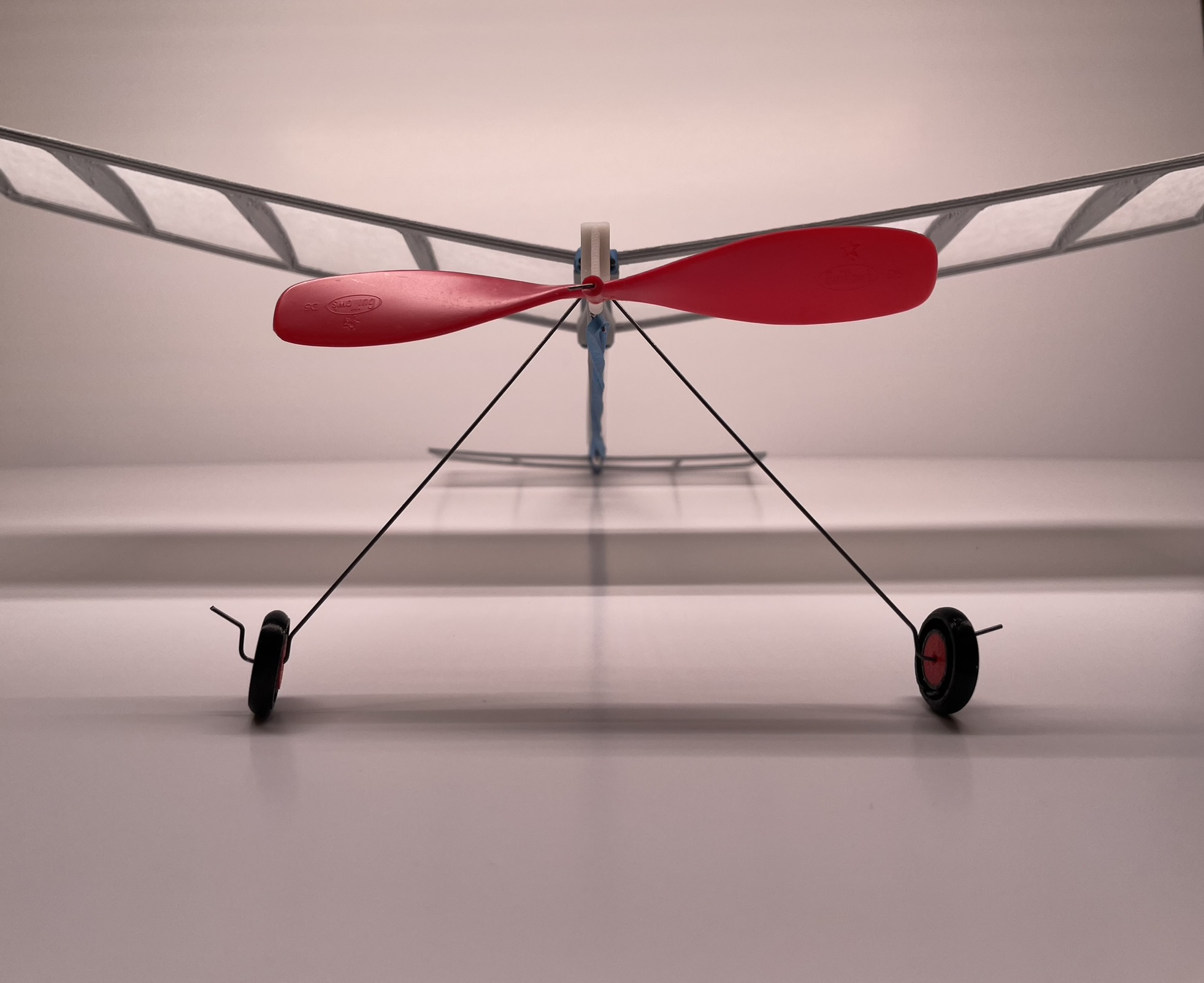
RC aircraft, drone airframes and large props where mass matters more than strength
PLA with a blowing agent. Active-foaming grades expand at the nozzle and reach print densities near 0.40 g/cm³ at reduced flow; pre-foamed grades ship at 0.8–0.9 g/cm³ and do not expand further.
LW-PLA addresses mass rather than maximum strength. Its clearest established role is model aircraft, where reducing skin and airframe weight changes the aircraft’s overall weight budget. colorFabb also lists cosplay, where a large shell can become more comfortable to wear. Foaming permits a lower-density printed volume instead of merely removing infill from an otherwise dense material.
Active-foaming grades expand at the nozzle and need temperature and flow calibrated together. Pre-foamed grades arrive at reduced density and do not respond the same way. Lower density comes with lower stiffness and strength, while foaming also changes surface finish and dimensional behavior. The gallery’s free-flight airplane is a mixed-material assembly, a useful reminder that lightweight printed shells and separate reinforcement often perform different jobs.
FDM · colorFabb LW-PLA active-foaming filament · Manufacturer-listed applications
colorFabb lists RC planes and cosplay for its active-foaming LW-PLA. In both, lower printed density reduces the mass of a large shell or airframe.
A rubber-band-powered model airplane built using LW-PLA and another filament, with tissue wing covering, carbon rods and a separate propeller. The uploader reports a sub-19 g complete model.
Listing note: “using light weight PLA and a more impact resistant filament material.”
Printables listing uploaded by Heber · CC BY-NC 4.0Original listing · Checked 2026-10-17. This is an uploader report, not an independent material test.Source image · Image bytes unchanged; displayed in full. Noncommercial reuse only.
Representative catalog values. Check the exact grade and its linked conditions before using a setting.
210–260 (Bambu Lab, foaming); 195–260 (colorFabb, foaming); 190–210 (Polymaker, pre-foamed)
210–260 (Bambu Lab, foaming); 195–260 (colorFabb, foaming); 190–210 (Polymaker, pre-foamed)
35–45 (Bambu Lab); 50–60 (colorFabb); 25–60 (Polymaker)
35–45 (Bambu Lab); 50–60 (colorFabb); 25–60 (Polymaker)
Open frame is fine
55 °C for 6–8 h
55 °C for 6–8 h
Open a topic to explore the complete data. Each value keeps its original conditions, units and dated sources.
| Property and unit | Published value and conditions | Sources and dates |
|---|---|---|
| Base polymer / chemistry | PLA with a blowing agent. Two distinct types: active-foaming grades that expand at the nozzle (Bambu Lab PLA Aero, colorFabb LW-PLA) and pre-foamed grades that do not (Polymaker PolyLite LW-PLA, PolyWood) | 4 sources
|
| Density (g/cm³) | Filament 1.21 (Bambu Lab) and 1.24 (colorFabb); pre-foamed filament 0.8 (PolyWood, at 21.5 °C) and 0.9 (Polymaker LW-PLA); foamed prints reach 0.40 | 4 sources
|
| Typical price (USD/kg) | 1 kg-equivalent spools cluster near 45 | 3 sources
|
| Price range across brands (USD/kg) | 37–50 across brands; Polymaker LW-PLA 37, Bambu Lab Aero 45, colorFabb 50, PolyWood 50 | 3 sources
|
| Market availability (1–5) | Available from several mainstream brands | 3 sources
|
| Spool sizes & diameters | 1.75 and 2.85 mm; 0.6, 0.75, 0.8 and 1 kg spools | 2 sources
|
| Typical applications | RC aircraft, drone airframes and large props where mass matters more than strength | 2 sources
|
| Property and unit | Published value and conditions | Sources and dates |
|---|---|---|
| Nozzle temperature (°C) | 210–260 (Bambu Lab, foaming); 195–260 (colorFabb, foaming); 190–210 (Polymaker, pre-foamed) | 3 sources
|
| Bed temperature (°C) | 35–45 (Bambu Lab); 50–60 (colorFabb); 25–60 (Polymaker) | 3 sources
|
| Enclosure / chamber requirement (1–5) | Open frame is fine | 1 source
|
| Part cooling fan | Fan on | 2 sources
|
| Maximum volumetric flow (mm³/s; see test conditions) (mm³/s) | 3.2–8 at the 40–100 mm/s colorFabb specifies and the 50–100 mm/s Polymaker specifies, on a 0.4 mm nozzle at 0.2 mm layer | 3 sources
|
| Overall printing difficulty (1–5) | Intermediate — dry filament and a tuned profile; flow has to be cut to match the expansion | 1 source
|
| Extruder requirement | Bambu Lab PLA Aero is 0.4 mm nozzle only on the store and wiki, while its own TDS lists 0.4, 0.6 and 0.8 | 2 sources
|
| Property and unit | Published value and conditions | Sources and dates |
|---|---|---|
| Nozzle hardness required (1–4) | Brass fine indefinitely | 2 sources
|
| Abrasiveness (1–5) | Non-abrasive | 2 sources
|
| Nozzle clog risk (1–5) | High — jams from moisture, heat creep or particles; Bambu Lab warns the foamed extrudate swells and easily clogs the nozzle, and rules out 0.2 mm nozzles | 1 source
|
| Property and unit | Published value and conditions | Sources and dates |
|---|---|---|
| Moisture absorption (hygroscopicity) (1–5) | Moderate — 0.45 % saturated at 25 °C / 55 % RH (Bambu Lab); 0.40 % equilibrium (Polymaker) | 2 sources
|
| Equilibrium moisture content at ~50 % RH (%) | 0.45 saturated at 25 °C / 55 % RH (Bambu Lab); 0.40 equilibrium (Polymaker) | 2 sources
|
| Drying temperature & time | 55 °C for 6–8 h | 2 sources
|
| Effect of moisture on strength | Polymaker rates PLA low-sensitivity and publishes no dry-versus-conditioned figures for this grade; absorbed water flashes to steam and shows as bubbling and poor layer adhesion | 1 source
|
| Property and unit | Published value and conditions | Sources and dates |
|---|---|---|
| Tensile strength (XY) (MPa) | 24 ± 2 (Bambu Lab) and 24.4 (Polymaker) printed XY, ISO 527; colorFabb falls from 43.1 unfoamed to 10.8 at 45 % flow | 3 sources
|
| Young's modulus (MPa) | 1350 ± 250 (Bambu Lab) and 1689 (Polymaker) printed XY, ISO 527; colorFabb falls from 3334 unfoamed to 864 foamed | 3 sources
|
| Elongation at break (%) | 2.6 ± 0.7 (Bambu Lab) and 8.8 (Polymaker) printed XY, ISO 527 | 2 sources
|
| Flexural strength (MPa) | 45 ± 4 (Bambu Lab) and 50.2 (Polymaker) printed XY, ISO 178 | 2 sources
|
| Flexural modulus (MPa) | 1690 ± 120 (Bambu Lab) and 1959 (Polymaker) printed XY, ISO 178 | 2 sources
|
| Charpy impact, notched (kJ/m²) | 8.2 ± 0.7 printed XY, ISO 179, notched (Bambu Lab); colorFabb 3.67 foamed | 2 sources
|
| Other impact data | Charpy unnotched 28.8 printed XY (Bambu Lab); colorFabb 5.46 foamed | 2 sources
|
| Layer adhesion / Z tensile (MPa) | 18 ± 3 printed Z, ISO 527 (Bambu Lab); flexural Z collapses to 17 against 45 in XY | 1 source
|
| Brittleness (1–5) | Brittle — snaps with little warning; elongation at break 2.6 % in XY and 1.2 % in Z | 1 source
|
| Creep resistance / sustained load (1–5) | Poor — no foamed-grade creep test; plain printed PLA sagged from 12 to 16.2–21.8 mm over 5 days at 1.25 kg, and the foam carries less solid | 3 sources
|
| Fatigue / repeated-flex resistance (1–5) | Poor — no grade-specific S-N curve; plain printed PLA ran 38 000–49 000 cycles at 30 % of tensile strength and elongation at break falls to 2.6 % in XY and 1.2 % in Z | 2 sources |
| Elasticity / flexibility (1–5) | Rigid | 1 source
|
| Z strength as % of XY (%) | 75 by tensile, 38 by flexural (printed, Bambu Lab) | 1 source
|
| Property and unit | Published value and conditions | Sources and dates |
|---|---|---|
| HDT at 0.45 MPa (°C) | 53 (Bambu Lab) and 54 (Polymaker), ISO 75 at 0.45 MPa | 2 sources
|
| HDT at 1.8 MPa (°C) | 48 (Bambu Lab) and 50 (Polymaker), ISO 75 at 1.8 MPa | 2 sources
|
| Glass transition (Tg) (°C) | 55 (Bambu Lab) and 59 (Polymaker), DSC | 2 sources
|
| Melting point / Vicat (°C) | 150 peak melt (Polymaker, DSC); Vicat 60 °C | 1 source
|
| Annealing response | Bambu Lab advises against annealing thin, low-infill Aero prints | 1 source
|
| Property and unit | Published value and conditions | Sources and dates |
|---|---|---|
| UV resistance (1–5) | Degrades within weeks outdoors | 1 source
|
| Property and unit | Published value and conditions | Sources and dates |
|---|---|---|
| Fume toxicity (1–5) | Low hazard — minimal VOC and particle emission | |
| Ventilation / filtration requirement (1–5) | None needed in a normal room |
| Property and unit | Published value and conditions | Sources and dates |
|---|---|---|
| Dimensional accuracy & detail | Foamed surfaces are rough and matte; dimensional accuracy depends on holding the foaming temperature steady | 2 sources
|
| Property and unit | Published value and conditions | Sources and dates |
|---|---|---|
| Soluble in | Chloroform dissolves the PLA matrix; the foamed wall wicks solvent right through instead of only skinning over. | 1 source |
| Softened or crazed by | Acetone, ethyl acetate and toluene plasticise the matrix but dissolve <1 % even at 65 °C; acetone submersion crazes parts. | 2 sources
|
| Solvent welding & smoothing agent | Chloroform vapour reaches only the resin skin; no workshop-safe smoothing agent exists for PLA of any kind. | 2 sources |
Values describe representative grades, not every spool. Manufacturer datasheets and independent tests retain their source labels and dates. Printed orientation, test method, conditioning and formulation can change results. Unknown values are —. A listed use is not a certification. Shore A, Shore D and Rockwell hardness are separate scales.
Historical USD/kg snapshots. Read each listing’s sale/from qualifiers, spool mass, source date, shipping and tax notes. Product figures are separate from the material summary.
$29.99 / 0.8 kg spool = $37.49/kg, Polymaker product catalogue, Aug 2026
Handle polylite-lw-pla. Pre-foamed — Polymaker states it does not foam further at the nozzle. Filament density 0.9 g/cm³.
Open product listing ↗| Density (g/cm³) | 0.9 (ISO 1183) |
|
|---|---|---|
| Nozzle temperature (°C) | 190–210 |
|
| Bed temperature (°C) | 25–60 |
|
| Equilibrium moisture content at ~50 % RH (%) | 0.40 equilibrium water absorption at 70 % RH, 23 °C |
|
| Tensile strength (XY) (MPa) | 24.4 (printed XY, ISO 527) |
|
| Young's modulus (MPa) | 1688.5 ± 80.8 (printed XY, ISO 527); Z 1726.3 |
|
| Elongation at break (%) | 8.8 ± 0.3 (printed XY, ISO 527); Z 2.0 |
|
| Flexural strength (MPa) | 50.2 ± 1.6 (printed XY, ISO 178) |
|
| Flexural modulus (MPa) | 1958.9 ± 72.6 (printed XY, ISO 178) |
|
| Charpy impact, notched (kJ/m²) | 2.4 ± 0.3 (printed XY, ISO 179, notched) |
|
| Layer adhesion / Z tensile (MPa) | 20.8 ± 0.9 (printed Z, ISO 527) |
|
| Z strength as % of XY (%) | 85 (printed Z 20.8 vs XY 24.4, ISO 527) |
|
| HDT at 0.45 MPa (°C) | 54 (ISO 75, 0.45 MPa) |
|
| HDT at 1.8 MPa (°C) | 50 (ISO 75, 1.8 MPa) |
|
| Glass transition (Tg) (°C) | 59 (DSC) |
|
| Melting point / Vicat (°C) | 150 melting (DSC); Vicat 60 (ISO 306) |
|
$44.99 / 1 kg spool, us.store.bambulab.com, Aug 2026
Active-foaming: filament density 1.21 g/cm³, nozzle 210–260 °C, 0.4 mm nozzle only per the store and wiki.
Open product listing ↗| Density (g/cm³) | 1.21 filament (ISO 1183) |
|
|---|---|---|
| Nozzle temperature (°C) | 210–260 |
|
| Bed temperature (°C) | 35–45 |
|
| Equilibrium moisture content at ~50 % RH (%) | 0.45 saturated at 25 °C / 55 % RH |
|
| Tensile strength (XY) (MPa) | 24 ± 2 (printed XY, ISO 527) |
|
| Young's modulus (MPa) | 1350 ± 250 (printed XY, ISO 527); Z 1240 |
|
| Elongation at break (%) | 2.6 ± 0.7 (printed XY, ISO 527); Z 1.2 |
|
| Flexural strength (MPa) | 45 ± 4 (printed XY, ISO 178); Z 17 |
|
| Flexural modulus (MPa) | 1690 ± 120 (printed XY, ISO 178); Z 1410 |
|
| Charpy impact, notched (kJ/m²) | 8.2 ± 0.7 (printed XY, ISO 179, notched) |
|
| Other impact data | Charpy unnotched 28.8 kJ/m² XY, 3.1 kJ/m² Z (printed, ISO 179) |
|
| Layer adhesion / Z tensile (MPa) | 18 ± 3 (printed Z, ISO 527) |
|
| Z strength as % of XY (%) | 75 (printed Z 18 vs XY 24, ISO 527) |
|
| HDT at 0.45 MPa (°C) | 53 (ISO 75, 0.45 MPa) |
|
| HDT at 1.8 MPa (°C) | 48 (ISO 75, 1.8 MPa) |
|
| Glass transition (Tg) (°C) | 55 (DSC) |
|
| Melting point / Vicat (°C) | 153 melting (DSC); Vicat 54 (ISO 306) |
|
$29.99 / 0.6 kg spool = $49.98/kg, Polymaker product catalogue, Aug 2026
Handle polymaker-wood-pla. Contains no wood — the TDS describes it as a wood mimic made entirely from PLA by foaming. Density 0.8 g/cm³.
Open product listing ↗| Density (g/cm³) | 0.8 (ASTM D792 / ISO 1183, at 21.5 °C) |
|
|---|---|---|
| Nozzle temperature (°C) | 190–210 |
|
| Bed temperature (°C) | 25–60 |
|
| Tensile strength (XY) (MPa) | 23.2 ± 0.4 (printed XY, ISO 527) |
|
| Elongation at break (%) | 8.2 ± 0.9 (printed XY, ASTM D638 / ISO 527) |
|
| Flexural strength (MPa) | 52.9 ± 0.3 (printed XY, ASTM D790 / ISO 178) |
|
| Flexural modulus (MPa) | 2607 ± 50 (printed XY, ASTM D790 / ISO 178) |
|
| Charpy impact, notched (kJ/m²) | 2.1 ± 0.2 (printed XY, ASTM D256 / ISO 179) |
|
| Glass transition (Tg) (°C) | 62 (DSC) |
|
| Melting point / Vicat (°C) | 151 melting (DSC); Vicat 60 (ASTM D1525 / ISO 306) |
|
$37.50 / 750 g spool = $50.00/kg, colorfabb.us, Aug 2026
Active-foaming: starts foaming near 230 °C and expands nearly three times in volume; colorFabb advises cutting flow by 65 %.
Open product listing ↗| Density (g/cm³) | 0.40 foamed to 1.24 unfoamed |
|
|---|---|---|
| Diameter tolerance (± mm) | ±0.05 max roundness deviation |
|
| Nozzle temperature (°C) | 195–260 |
|
| Bed temperature (°C) | 50–60 |
|
| Tensile strength (XY) (MPa) | 43.07 at 200 °C and 100 % flow, 10.83 at 250 °C and 45 % flow (printed, ISO 527) |
|
| Young's modulus (MPa) | 3350 unfoamed at 200 °C, 860 foamed at 250 °C (printed XY, ISO 527-1A) |
|
| Elongation at break (%) | 8.1 unfoamed, 12.8 foamed (printed XY, ISO 527-1A) |
|
| Charpy impact, notched (kJ/m²) | 3.7 foamed at 250 °C (printed XY, ISO 179, notched) |
|
| HDT at 0.45 MPa (°C) | 60 (HDT-B, ISO 75, unfoamed resin data) |
|
| Glass transition (Tg) (°C) | 55–60 (DSC, ISO 11357, unfoamed resin data) |
|
| Melting point / Vicat (°C) | 150–160 melting (DSC, ISO 11357, unfoamed resin data) |
|
PLA with a raised melt index and tuned crystallisation so it can be extruded at roughly 24 mm³/s, about 30 % more flow than…
10 product listingsPLA compounded with a chalk-type mineral filler for a diffuse finish; density rises to 1.31–1.38 g/cm³ and flexural strength…
10 product listings
A familiar starting point for models, prototypes and everyday prints at room temperature.
25 product listingsCompare Lightweight / foaming PLA (LW-PLA) with another filament