
3D Printing Info
Polycarbonate · Material guide

Carbon-fibre PC (PC-CF)

PC with chopped carbon fibre: flexural modulus rises from about 2.1 to 3.5–6.5 GPa and HDT at 1.8 MPa from 93 to 106 °C, and unusually the fibre raises interlayer adhesion rather than…

6 product listings6 brands
Open in interactive comparison
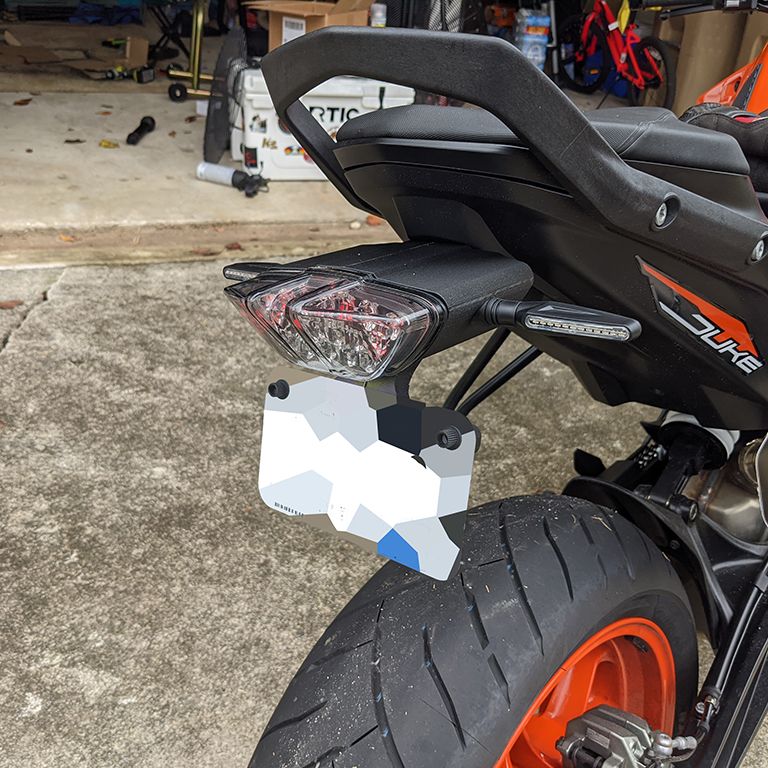
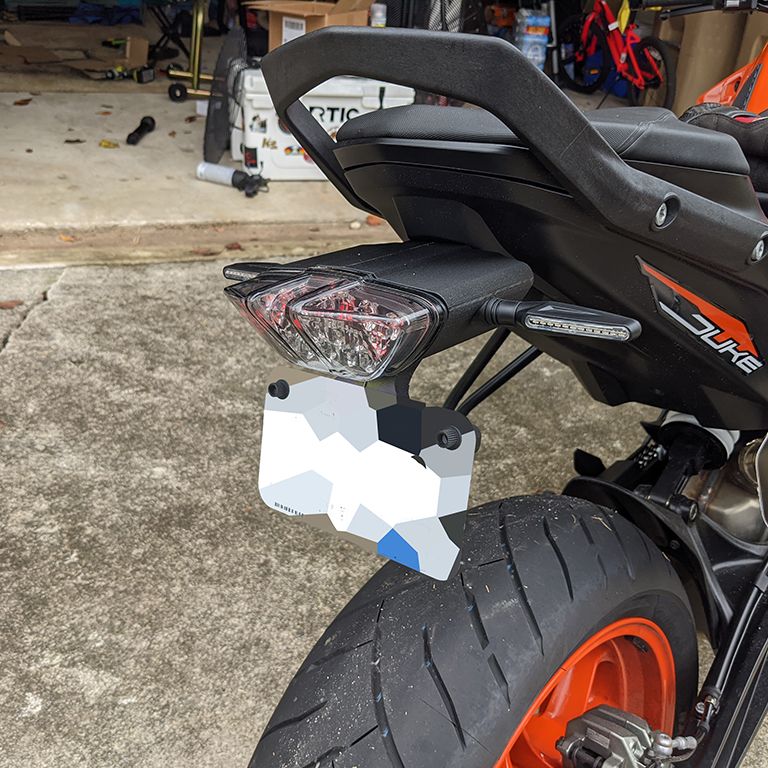
KTM Duke 790 Tidy Tail shown in the Ecapox Printables listing; reported material: Carbon-fibre PC (PC-CF)
Reported material: Carbon-fibre PC (PC-CF)KTM Duke 790 Tidy Tail Printables listing uploaded by Ecapox · CC BY 4.0Source image · Image bytes unchanged; displayed in full.
Understand the material

At a glance

Before you print

Setup difficulty
Advanced — enclosure, hardware upgrades, tuning; hardened nozzle mandatory
Nozzle wear
Highly abrasive — standard CF composite
Read conditions and sources ↓
Read the full material overview

PC with chopped carbon fibre: flexural modulus rises from about 2.1 to 3.5–6.5 GPa and HDT at 1.8 MPa from 93 to 106 °C, and unusually the fibre raises interlayer adhesion rather than cutting it.

Applications

Carbon-filled PC is chosen primarily to make a heat-resistant part harder to bend. In a camera mount, fixture or mechanical housing, that means locating surfaces can remain aligned under loads that would flex an unfilled part. Prusa demonstrates this engineering role with a fan shroud and the Landy model vehicle mechabox, alongside other mechanical components made from PC Blend Carbon Fiber.

The compromise is reduced capacity for elastic deformation, making thin snap arms and sharply loaded corners less forgiving. Fibre orientation affects stiffness and thermal movement, while interlayer strength still depends on printing conditions. The filament is abrasive and moisture-sensitive, and its PC matrix retains chemical and outdoor-weathering limitations. Carbon reinforcement alone also does not make the part electrically dissipative.

  • Landy model vehicle mechabox ↗

    FDM/FFF printing · Prusament PC Blend Carbon Fiber; grade-specific demonstration · Manufacturer-listed applications

    Prusa presents the Landy mechabox by 3Dsets as a PC Blend Carbon Fiber example for stressed moving components. The point is a mechanically stiff, heat-resistant housing; it is a manufacturer demonstration rather than an independently validated life test.

  • Printer fan shroud ↗

    FDM/FFF printing · Prusament PC Blend Carbon Fiber; heat resistance must follow that grade and print conditions · Manufacturer-listed applications

    Prusa illustrates a fan shroud as a heat-resistant PC Blend Carbon Fiber application. This supports the practical use of reinforced PC around warm equipment without implying suitability at heater-block temperatures.

Sources
Plan your printer setup

Printing quick reference

All print settings ↓

Representative catalog values. Check the exact grade and its linked conditions before using a setting.

04

Drying

—

Full value & sources

—

—
Go deeper when you need to

Properties & source data

61 documented fields

Open a topic to explore the complete data. Each value keeps its original conditions, units and dated sources.

Material & market8 fields
Carbon-fibre PC (PC-CF) — Identity & Market
Property and unitPublished value and conditionsSources and dates
Base polymer / chemistryPolycarbonate reinforced with chopped carbon fibre
2 sources
Density (g/cm³)1.22 (Prusament) and 1.36 (3DXTech), ISO 1183
2 sources
Typical price (USD/kg)1 kg-equivalent spools span 35–117; the middle of the market is about 63
5 sources
Price range across brands (USD/kg)35–117 across brands; Ambrosia 35, IEMAI 39, YXPOLYER 55, Spectrum PC CF 70, Prusament 94, 3DXTech 117
5 sources
Market availability (1–5)Available from several mainstream brands
3 sources
Spool sizes & diameters1.75 and 2.85 mm; 0.75, 0.8 and 1 kg spools
2 sources
Typical applicationsStiff high-temperature structural parts — jigs, drone frames and under-bonnet brackets
2 sources
Diameter tolerance (± mm)±0.04 (Prusament PC Blend Carbon Fiber)
1 source
Print settings9 fields
Carbon-fibre PC (PC-CF) — Printing Parameters
Property and unitPublished value and conditionsSources and dates
Nozzle temperature (°C)285 ± 10 (Prusament)
1 source
Bed temperature (°C)110 ± 10 (Prusament)
1 source
Enclosure / chamber requirement (1–5)Enclosure required (passive)
2 sources
Part cooling fanOff — Prusa allows 0–20 % and warns cooling significantly reduces interlayer adhesion
1 source
Bed surface & adhesion aidPEI with a glue stick or a commercial adhesive
1 source
Warping tendency (1–5)High — enclosure needed for reliable large parts; the fibre reduces warping against unfilled PC
2 sources
Bed-adhesion difficulty (1–5)Needs a specific surface plus adhesive
2 sources
Stringing / oozing tendency (1–5)Moderate — retraction tuning needed; Polymaker flags stringing as a common PC problem
1 source
Overall printing difficulty (1–5)Advanced — enclosure, hardware upgrades, tuning; hardened nozzle mandatory
2 sources
Nozzle wear & reliability5 fields
Carbon-fibre PC (PC-CF) — Hardware Wear & Reliability
Property and unitPublished value and conditionsSources and dates
Nozzle hardness required (1–4)Hardened steel required
1 source
Abrasiveness (1–5)Highly abrasive — standard CF composite
1 source
Nozzle clog risk (1–5)High — jams from moisture, heat creep or particles; PC already absorbs water from the air and 3DXTech adds a hardened 0.4 mm minimum nozzle, 0.25 mm layers and a 120 °C pre-dry
3 sources
Heat-creep / jam sensitivity (1–5)Slightly sensitive
1 source
Hotend requirementAll-metal hot end required (Simplify3D)
1 source
Moisture & drying5 fields
Carbon-fibre PC (PC-CF) — Moisture Behaviour
Property and unitPublished value and conditionsSources and dates
Moisture absorption (hygroscopicity) (1–5)Low (0.1–0.3 %) — the PC matrix takes up 0.15–0.25 % and 3DXTech specifies a 120 °C, 4 h pre-dry
3 sources
Equilibrium moisture content at ~50 % RH (%)0.11 after 7 days at 24 °C / 22 % RH (Prusa Polymers)
1 source
Symptoms when wetBubbling and popping at the nozzle, stringing and a rough surface
1 source
Effect of moisture on strengthNo dry-versus-conditioned figures are published. Polymaker calls PC highly hygroscopic and requires a 70–80 °C dry for 6–8 h; run wet, the loss shows as surface defects and poor layer adhesion
2 sources
Storage requirementAirtight containers with desiccant to prevent reabsorption
1 source
Strength & mechanical properties13 fields
Carbon-fibre PC (PC-CF) — Mechanical Properties
Property and unitPublished value and conditionsSources and dates
Tensile strength (XY) (MPa)64 ± 3 printed horizontal and 70 ± 3 printed vertical at yield, ISO 527-1 (Prusament); 3DXTech quotes 73 at break
2 sources
Young's modulus (MPa)2600 printed horizontal and 3200 printed vertical, ISO 527-1 (Prusament); 3DXTech quotes 6980
2 sources
Elongation at break (%)4.6 at yield printed horizontal (Prusament); 3DXTech quotes 2.1 at break
2 sources
Flexural strength (MPa)94 ± 3 printed horizontal and 130 ± 2 printed vertical, ISO 178 (Prusament); 3DXTech quotes 85
2 sources
Flexural modulus (MPa)3500 printed horizontal and 4200 printed vertical, ISO 178 (Prusament); 3DXTech quotes 6540
2 sources
Charpy impact, notched (kJ/m²)12 ± 1 printed horizontal and 17 ± 2 printed vertical, ISO 179-1 notched (Prusament)
1 source
Other impact dataCharpy unnotched 32 ± 5 printed horizontal and 35 ± 4 printed vertical (Prusament, ISO 179-1)
1 source
Layer adhesion / Z tensile (MPa)23 ± 2 (Prusa Polymers interlayer adhesion test) — above the 21 ± 2 of unfilled Prusament PC Blend
2 sources
Brittleness (1–5)Moderate
2 sources
Hardness (scale-specific) (Shore A / Shore D / Rockwell)83 Shore D (Prusa Polymers method), against 79 for unfilled Prusament PC Blend
2 sources
Creep resistance / sustained load (1–5)Excellent — holds load for years. Room-temperature tensile creep of moulded unfilled PC ran unbroken at 41 MPa until the test was stopped; short carbon fibre raises the flexural modulus from about 2.1 to 3.5-6.5 GPa, which reduces creep strain further
2 sources
Fatigue / repeated-flex resistance (1–5)Good. No fatigue test data was found for a carbon-fibre PC filament; the unfilled polymer is rated Good on the same scale
1 source
Elasticity / flexibility (1–5)Rigid
1 source
Heat & temperature4 fields
Carbon-fibre PC (PC-CF) — Thermal Properties
Property and unitPublished value and conditionsSources and dates
HDT at 0.45 MPa (°C)114 (ISO 75, 0.45 MPa, Prusament)
1 source
HDT at 1.8 MPa (°C)106 (ISO 75, 1.8 MPa, Prusament), against 93 for unfilled Prusament PC Blend
2 sources
Glass transition (Tg) (°C)127 (3DXTech, DSC)
1 source
Continuous service temperature (°C)113 — Prusa publishes this as the temperature resistance of Prusament PC Blend
1 source
Weather & chemical resistance6 fields
Carbon-fibre PC (PC-CF) — Environment & Chemical
Property and unitPublished value and conditionsSources and dates
UV resistance (1–5)Degrades within weeks outdoors unless stabilised
1 source
Chemical resistanceWithstands oils, solvents and fuels; Polymaker rates it good against weak acids
1 source
Food contactBisphenol-A polycarbonate is not offered as food-contact filament
1 source
Biodegradability / compostabilityNot biodegradable
1 source
RecyclabilityMechanically recyclable but not accepted in household plastic collection
1 source
Electrical & ESD propertiesSurface resistance above 10⁹ ohm/sq — not static-dissipative (3DXTech, ASTM D257)
1 source
Health & safety4 fields
Carbon-fibre PC (PC-CF) — Health & Safety
Property and unitPublished value and conditionsSources and dates
Fume toxicity (1–5)Moderate — measurable VOCs and UFPs, ventilation advised
1 source
Ultrafine-particle emission rate (particles/min)≈4 × 10¹⁰ median — the highest ultrafine-particle rate of the nine filaments in the chamber study, above every ABS tested
1 source
Ventilation / filtration requirement (1–5)Ventilated room or enclosure recommended
2 sources
Dust & fibre handling hazardCarbon fibre is bound in the matrix; sanding dust should not be inhaled
1 source
Finishing & post-processing4 fields
Carbon-fibre PC (PC-CF) — Post-Processing
Property and unitPublished value and conditionsSources and dates
Sanding & machiningSands and machines well; the toughness means it cuts rather than chips
1 source
Gluing & solvent weldingCyanoacrylate; dichloromethane solvent-welds PC but is a laboratory reagent
1 source
Vapour / chemical smoothingNo practical vapour smoothing
1 source
Support material pairingPrints its own supports; 3DXTech sells a dedicated PC break-away support
1 source
Solvents & solubility3 fields
Carbon-fibre PC (PC-CF) — Solvents & Solubility
Property and unitPublished value and conditionsSources and dates
Soluble inDichloromethane and chloroform dissolve the matrix and leave the fibre; DMF and dioxane do the same (Covestro).
1 source
Softened or crazed byMethanol, butyl acetate, ether, 1 % NaOH and phthalate plasticisers stress-crack it; acetone, MEK and xylene swell it.
1 source
Solvent welding & smoothing agentDichloromethane cement welds the resin, but the fibre keeps the joint from flowing closed. Controlled carcinogen.
1 source
How to read these values

Values describe representative grades, not every spool. Manufacturer datasheets and independent tests retain their source labels and dates. Printed orientation, test method, conditioning and formulation can change results. Unknown values are —. A listed use is not a certification. Shore A, Shore D and Rockwell hardness are separate scales.

Find a specific filament

Product listings and datasheets

6 listings

Historical USD/kg snapshots. Read each listing’s sale/from qualifiers, spool mass, source date, shipping and tax notes. Product figures are separate from the material summary.

Browse 6 products from 6 brands
AmbrosiaPC-CF34.99 USD/kg

$34.99 / 1 kg spool (1 kg net, 1.75 mm), filastruder.com, Aug 2026

Handle ambrosia-pc-cf-filament-copy. Filastruder states the blend contains approximately 10 % PETG, so it is a PC/PETG-CF alloy rather than a straight PC-CF.

Open product listing ↗
Ambrosia PC-CF — product-specific figures
Density (g/cm³)1.21 (ISO 1183)
Spool sizes & diameters1 kg net; 1.75 mm
Diameter tolerance (± mm)0.03
Nozzle temperature (°C)250–290 (Ambrosia recommends 270)
Bed temperature (°C)100–115 (Ambrosia recommends 110)
Recommended chamber temperature (°C)40–120 (Ambrosia recommends 60)
Part cooling fan0–70 %, depending on cooling capability
Equilibrium moisture content at ~50 % RH (%)<0.2 at 23 °C over 24 h (ISO 62)
Tensile strength (XY) (MPa)40 (ISO 527; specimen type not stated)
Elongation at break (%)7.5–8.5 (ISO 527; specimen type not stated)
Flexural strength (MPa)85 (ISO 178; specimen type not stated)
Flexural modulus (MPa)2400 (specimen type not stated)
HDT at 0.45 MPa (°C)120 (ISO 75, 0.455 MPa)
IEMAI 3DCF-PC39.00 USD/kg

$39.00 / 1 kg spool, store.iemai3d.com, Aug 2026 (regular price $42.00)

Open product listing ↗
IEMAI 3D CF-PC — product-specific figures
Density (g/cm³)1.38 (ISO 1183)
Tensile strength (XY) (MPa)72 (ISO 527, at break)
Young's modulus (MPa)6205 (ISO 527)
Elongation at break (%)2.5 (ISO 527)
Flexural strength (MPa)92 (ISO 178)
Flexural modulus (MPa)5880 (ISO 178)
HDT at 0.45 MPa (°C)135 (ISO 75, 0.45 MPa)
Glass transition (Tg) (°C)143 (DSC)
Electrical & ESD propertiesSurface resistance above 10⁹ ohm/sq — not static-dissipative (ASTM D257)
YXPOLYERPC-CF54.99 USD/kg

$54.99 / 1 kg spool, yxpolyer.com, Aug 2026

15 % carbon fibre; vendor claims heat resistance to 140 °C. A 50 g sample spool is listed at $14.99. YXPOLYER's product page claims heat resistance up to 140 °C but names no test method; no density, tolerance or mechanical data is published.

Open product listing ↗
YXPOLYER PC-CF — product-specific figures
Base polymer / chemistryPC with 15 % carbon fibre
SpectrumPC CF70.16 USD/kg

$17.54 / 250 g spool = $70.16/kg excluding VAT, 3djake.com, Aug 2026

Carbon black, 1.75 mm, 250 g. The mechanical block of this sheet (76 MPa tensile at yield, >100 % elongation to ASTM D638, 70 kg·cm/cm notched Izod) reads as base-resin data rather than printed-part data and is not recorded as specs.

Open product listing ↗
Spectrum PC CF — product-specific figures
Base polymer / chemistryPC 275 formulation with 10 % carbon fibre
Density (g/cm³)1.22 (ASTM D792)
Nozzle temperature (°C)270–290
Bed temperature (°C)80 or above
Enclosure / chamber requirement (1–5)Enclosure recommended for larger prints
Part cooling fan0–20 %
Nozzle hardness required (1–4)Hardened steel required — ruby or hardened nozzle specified
Drying temperature & timeAt least 6 h at 75 °C in a hot-air oven
HDT at 0.45 MPa (°C)140 (ASTM D648, 0.45 MPa)
HDT at 1.8 MPa (°C)129 (ASTM D648, 1.81 MPa)
Melting point / Vicat (°C)Vicat 150 (ASTM D1525)
Prusa PolymersPrusament PC Blend Carbon Fiber93.74 USD/kg

$74.99 / 800 g spool with NFC = $93.74/kg, printedsolid.com product catalogue, Aug 2026

Handle prusament-pc-blend-carbon-fiber-black-800g. Interlayer adhesion 23 ± 2 MPa, above the unfilled blend's 21.

Open product listing ↗
Prusa Polymers Prusament PC Blend Carbon Fiber — product-specific figures
Density (g/cm³)1.22 (Prusa Polymers method)
Diameter tolerance (± mm)±0.04
Nozzle temperature (°C)285 ± 10
Bed temperature (°C)110 ± 10
Equilibrium moisture content at ~50 % RH (%)0.11 after 7 days at 24 °C / 22 % RH
Tensile strength (XY) (MPa)64 ± 3 at yield (printed horizontal, ISO 527-1); vertical xz 70
Young's modulus (MPa)2600 ± 100 (printed horizontal, ISO 527-1); vertical xz 3200
Elongation at break (%)4.6 ± 0.4 at yield (printed horizontal, ISO 527-1)
Flexural strength (MPa)94 ± 3 (printed horizontal, ISO 178); vertical xz 130
Flexural modulus (MPa)3500 ± 200 (printed horizontal, ISO 178); vertical xz 4200
Charpy impact, notched (kJ/m²)12 ± 1 (printed horizontal, ISO 179-1, notched); vertical xz 17
Other impact dataCharpy unnotched 32 kJ/m² horizontal, 35 kJ/m² vertical xz (ISO 179-1)
Layer adhesion / Z tensile (MPa)23 ± 2 (Prusa Polymers interlayer adhesion test)
Hardness (scale-specific) (Shore A / Shore D / Rockwell)83 Shore D
Z strength as % of XY (%)36 (interlayer adhesion 23 vs printed horizontal tensile 64)
HDT at 0.45 MPa (°C)114 (ISO 75, 0.45 MPa)
HDT at 1.8 MPa (°C)106 (ISO 75, 1.8 MPa)
3DXTechCarbonX PC+CF117.33 USD/kg

$88.00 / 750 g spool = $117.33/kg, 3dxtech.com product catalogue, Aug 2026

Handle carbonx-ezpc-cf-1. Tensile modulus 6980 MPa and flexural modulus 6540 MPa.

Open product listing ↗
3DXTech CarbonX PC+CF — product-specific figures
Density (g/cm³)1.36 (ISO 1183)
Nozzle temperature (°C)275 (TDS printed-specimen condition)
Bed temperature (°C)95 (TDS printed-specimen condition)
Tensile strength (XY) (MPa)73 at break (printed XY, ISO 527)
Young's modulus (MPa)6980 (ISO 527)
Elongation at break (%)2.1 at break (printed XY, ISO 527)
Flexural strength (MPa)85 (printed XY, ISO 178)
Flexural modulus (MPa)6540 (ISO 178)
HDT at 0.45 MPa (°C)119 (ISO 75, 0.45 MPa)
Glass transition (Tg) (°C)127 (DSC)
Electrical & ESD propertiesSurface resistance >10^9 Ω/sq (ASTM D257)

Material selection articles

Compare specific grades and connect test results to part design.

Compare Carbon-fibre PC (PC-CF) with another filament