 3D Printing Info
Where it is used
Capacitive touch surfaces, low-current traces, EMI shielding and static-safe fixtures
PLA loaded with conductive carbon to give volume conductivity rather than the merely dissipative range of ESD grades. The loading needed to conduct also makes it markedly brittle.
Open in interactive comparison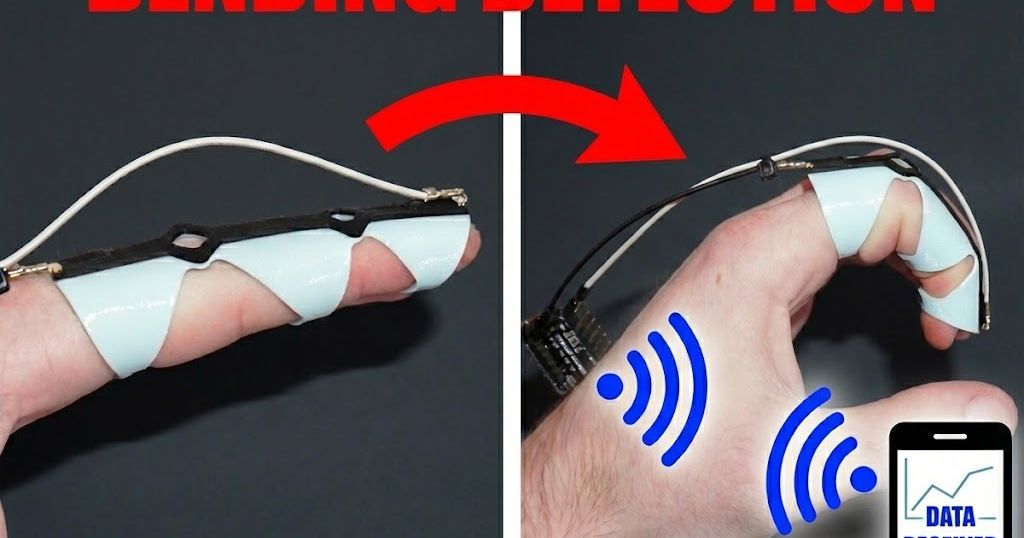
Capacitive touch surfaces, low-current traces, EMI shielding and static-safe fixtures
PLA loaded with conductive carbon to give volume conductivity rather than the merely dissipative range of ESD grades. The loading needed to conduct also makes it markedly brittle.
Conductive filament lets a printed shape participate in a circuit. Proto-pasta lists touch sensing and low-voltage circuitry for its conductive PLA; Recreus lists pressure-sensitive buttons and interactive controls for Conductive Filaflex. These are useful roles because an electrode or resistive element can follow the part’s shape, rather than being fitted afterwards as a separate metal piece.
The polymer and grade are central to the choice. Conductive PLA is different from conductive TPU, which can deform with a wearable or button. Printed resistance depends on geometry, layer direction and processing, so the part is not interchangeable with a copper wire. A conductive label also does not establish a controlled ESD protection level or effective EMI shielding for a finished assembly.
FDM · Proto-pasta Electrically Conductive Composite PLA · Manufacturer-listed applications
Proto-pasta specifically lists touch sensors and interaction with touch screens for its conductive PLA. The manufacturer describes it as a resistive conducting composite, making part geometry relevant to circuit design.
FDM · Recreus Conductive Filaflex TPU · Manufacturer-listed applications
Recreus lists conductive circuits, pressure-sensitive buttons, keyboards, trackpads and joysticks for its flexible conductive filament. These applications refer to the TPU grade, rather than conductive PLA.
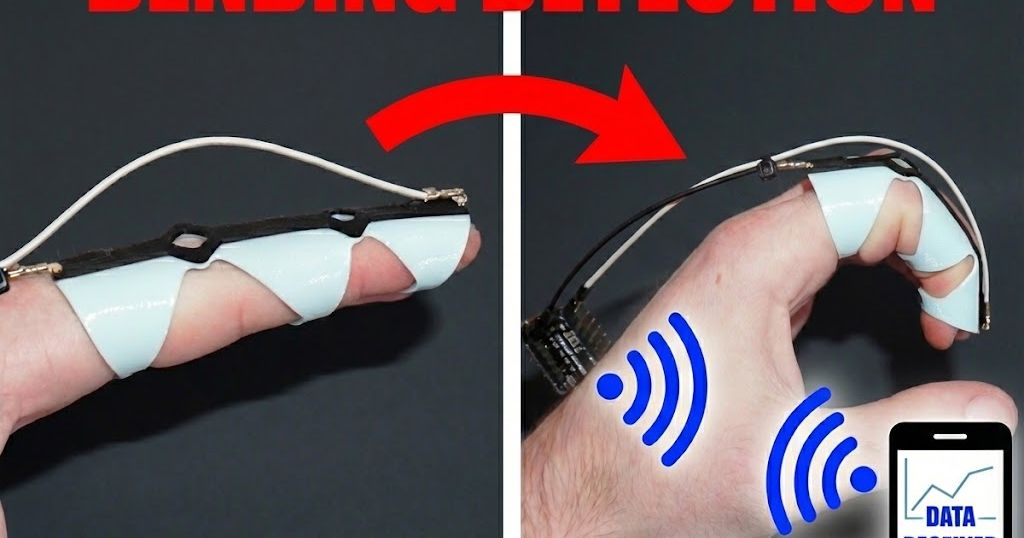
A working finger-bend sensor prototype: the dark sensing element uses Recreus FilaFlex Conductive, combined with a separate TPU base and electronics.
Listing note: “Conductive Element: Recreus FilaFlex Conductive”
Printables listing uploaded by How To Homemade · CC BY-SA 4.0Original listing · Checked 2026-10-17. This is an uploader report, not an independent material test.Source image · Image bytes unchanged; displayed in full. ShareAlike applies to adaptations.
Representative catalog values. Check the exact grade and its linked conditions before using a setting.
—
—
——
—
—Open frame is fine
Open frame is fine
—
—
—Open a topic to explore the complete data. Each value keeps its original conditions, units and dated sources.
| Property and unit | Published value and conditions | Sources and dates |
|---|---|---|
| Base polymer / chemistry | A carbon-filled compound conductive by volume rather than merely dissipative; Proto-pasta's is PLA-based, Recreus's and NinjaTek's are TPU, and add:north's Koltron G1 does not state its base polymer | 4 sources
|
| Typical price (USD/kg) | 1 kg-equivalent spools span 90–181 for the carbon-filled grades; add:north's Koltron G1 sits far above at 796 because it is sold only in 100 and 250 g coils | 3 sources
|
| Price range across brands (USD/kg) | 90–796 across brands; Proto-pasta conductive PLA 90 at 1 kg, Recreus Conductive Filaflex 160 at 500 g, NinjaTek Eel 181 at 1 kg, add:north Koltron G1 796 at 250 g | 4 sources
|
| Market availability (1–5) | Niche, a handful of specialist brands | 2 sources
|
| Spool sizes & diameters | 1.75 and 2.85 mm; 0.05, 0.1, 0.25, 0.5, 1 and 2 kg spools | 4 sources
|
| Typical applications | Capacitive touch surfaces, low-current traces, EMI shielding and static-safe fixtures | 1 source |
| Property and unit | Published value and conditions | Sources and dates |
|---|---|---|
| Enclosure / chamber requirement (1–5) | Open frame is fine | 1 source |
| Overall printing difficulty (1–5) | Intermediate — dry filament and a tuned profile | 1 source |
| Property and unit | Published value and conditions | Sources and dates |
|---|---|---|
| Nozzle hardness required (1–4) | Brass acceptable; hardened steel for volume work | 1 source |
| Abrasiveness (1–5) | Moderately abrasive — conductive carbon filler | 1 source |
| Nozzle clog risk (1–5) | Low — Proto-pasta states the carbon-filled grade prints on standard PLA settings with no special nozzle required | 1 source |
| Property and unit | Published value and conditions | Sources and dates |
|---|---|---|
| Effect of moisture on strength | Polymaker rates PLA low-sensitivity and publishes no dry-versus-conditioned figures; absorbed water flashes to steam and shows as bubbling and poor layer adhesion | 1 source
|
| Property and unit | Published value and conditions | Sources and dates |
|---|---|---|
| Brittleness (1–5) | Brittle — snaps with little warning; carbon-black loading at conductive levels embrittles PLA | 1 source |
| Elasticity / flexibility (1–5) | Rigid | 1 source |
| Property and unit | Published value and conditions | Sources and dates |
|---|---|---|
| Electrical & ESD properties | Conductive rather than dissipative — Proto-pasta sells the grade as electrically conductive composite PLA | 1 source |
| Property and unit | Published value and conditions | Sources and dates |
|---|---|---|
| Fume toxicity (1–5) | Low hazard — minimal VOC and particle emission; none of these materials was in the chamber study | |
| Ventilation / filtration requirement (1–5) | Open a window / occasional ventilation | |
| Dust & fibre handling hazard | Conductive carbon filler is bound in the matrix; avoid inhaling sanding dust | 1 source |
| Property and unit | Published value and conditions | Sources and dates |
|---|---|---|
| Soluble in | Chloroform dissolves PLA-based grades, leaving the carbon black; TPU-based grades need DMF, NMP or THF. Laboratory reagents. | 2 sources |
| Softened or crazed by | Acetone and ethyl acetate plasticise a PLA-based grade; a TPU-based grade swells in toluene, esters and alcohols. | 2 sources |
| Solvent welding & smoothing agent | None — neither PLA nor TPU has a workshop-safe welding or smoothing solvent. | 2 sources |
Values describe representative grades, not every spool. Manufacturer datasheets and independent tests retain their source labels and dates. Printed orientation, test method, conditioning and formulation can change results. Unknown values are —. A listed use is not a certification. Shore A, Shore D and Rockwell hardness are separate scales.
Historical USD/kg snapshots. Read each listing’s sale/from qualifiers, spool mass, source date, shipping and tax notes. Product figures are separate from the material summary.
$89.99 / 1 kg spool; 500 g $49.99 and 2 kg $199.95, proto-pasta.com, Aug 2026
Handle conductive-pla.
Open product listing ↗| Nozzle temperature (°C) | 210–230 |
|
|---|---|---|
| Bed temperature (°C) | 60 |
|
| Maximum volumetric flow (mm³/s; see test conditions) (mm³/s) | up to 8 (manufacturer maximum, 0.4 mm nozzle) |
|
| Electrical & ESD properties | Printed volume resistivity 19.2 Ω·cm flat XY, 33.6 Ω·cm vertical Z at 210 °C |
|
$79.90 / 500 g spool = $159.80/kg, recreus.com/en-en (USD storefront), Aug 2026
Conductive TPU. Recreus publishes print settings and hardness but no resistivity figure on the product page.
Open product listing ↗| Spool sizes & diameters | 1.75 and 2.85 mm, 500 g |
|
|---|---|---|
| Nozzle temperature (°C) | 250 on a 0.4 or 0.6 mm nozzle, 252 on 0.8 mm, 255 on 1.0 mm |
|
| Bed temperature (°C) | Room temperature for small parts; 50–55 for large ones |
|
| Part cooling fan | Off (0 %); 40 % for layers shorter than 10 s |
|
| Maximum volumetric flow (mm³/s; see test conditions) (mm³/s) | 4.0 on a 0.4 mm nozzle; 9.0 on 0.6 mm, 16.0 on 0.8 mm, 25.0 on 1.0 mm |
|
| Drying temperature & time | 55 °C, minimum 1 h |
|
| Hardness (scale-specific) (Shore A / Shore D / Rockwell) | 92 Shore A (manufacturer designation) |
|
$180.92 / 1 kg spool (1.75 mm, Midnight Black), ninjatek.com, Aug 2026
A conductive TPU rather than a filled PLA. Its data sheet reports dry-as-moulded and conditioned resin values to ISO, not printed specimens; the 355 % elongation on the product page is not in the data sheet.
Open product listing ↗| Density (g/cm³) | 1.18 (ISO 2781) |
|
|---|---|---|
| Nozzle temperature (°C) | 220–230 |
|
| Bed temperature (°C) | room temperature to 45; glue stick suggested |
|
| Tensile strength (XY) (MPa) | 29 at break and 17 at yield, conditioned (ISO 527-1/-2; resin, not printed) |
|
| Young's modulus (MPa) | 298 conditioned and 305 dry (ISO 527-1/-2; resin, not printed) |
|
| Elongation at break (%) | >50 nominal strain at break, dry and conditioned (ISO 527-1/-2; resin) |
|
| Flexural strength (MPa) | 310 conditioned (ISO 178; resin) |
|
| Other impact data | Charpy notched and unnotched both No break at 23 °C (ISO 179); notched 18 kJ/m² at -30 °C |
|
| Hardness (scale-specific) (Shore A / Shore D / Rockwell) | 60 Shore D, 15 s, conditioned (ISO 868) |
|
| Electrical & ESD properties | Volume resistivity 1.1×10^5 Ω·m and surface resistance 5500 Ω/sq (IEC 62631-3) — static-dissipative to weakly conductive |
|
$199.00 / 250 g coil = $796.00/kg (2.85 mm, Black), add:north USD list price, addnorth.com, Aug 2026
Sold only in 100 g and 250 g coils, which is why the per-kg figure is an order of magnitude above the rest of the group. Base polymer is not stated; add:north also lists it as thermally conductive with the highest flame-retardant rating.
Open product listing ↗| Density (g/cm³) | 1.8 (add:north data sheet); the product listing states 1.76 |
|
|---|---|---|
| Nozzle temperature (°C) | 280–295 |
|
| Bed temperature (°C) | 60 |
|
| Tensile strength (XY) (MPa) | 51 at break (ISO 527; specimen type not stated) |
|
| Young's modulus (MPa) | 562 (ISO 527) |
|
| Elongation at break (%) | >50 at break (ISO 527) |
|
| Flexural strength (MPa) | 89 (ISO 178) |
|
| Flexural modulus (MPa) | 2645 (ISO 178) |
|
| HDT at 0.45 MPa (°C) | >100 at 0.45 MPa (ISO 75) |
|
| Glass transition (Tg) (°C) | -34 (DSC) |
|
| Continuous service temperature (°C) | 130 (add:north product data) |
|
| Electrical & ESD properties | Volume resistivity 2 Ω·cm (ASTM D257) — genuinely conductive, several decades below the carbon-filled PLA grades here |
|